
Not every vehicle automatically needs the exact same level of paint correction before ceramic coating gets applied. The appropriate preparation depends on the condition of the paint and what you’re hoping the finished result will look like in the end. That said, there’s a real, specific detail worth understanding upfront: a baseline correction step is already part of how ceramic coating gets applied in the first place, regardless of how good your paint looks going in.
This guide explains why that’s true, what it actually means for your project, and when more extensive correction becomes worth considering rather than relying on generic advice that doesn’t reflect how the actual installation process works.
What Paint Correction Actually Does
Paint correction is a machine-polishing process that works directly on the clear coat to reduce the appearance of surface defects — swirl marks, light scratches, oxidation, and general dullness that builds up from years of washing and sun exposure. It works by carefully leveling out microscopic irregularities in the clear coat’s actual surface, which is why the process requires real skill and the right equipment rather than being something that can be rushed through quickly. It’s a different category of work entirely from detailing, which cleans and protects surfaces without changing the paint’s underlying condition. Correction changes what’s actually there; detailing maintains whatever condition already exists.
What Ceramic Coating Actually Does
Ceramic coating is a liquid polymer that chemically bonds with the paint to form a durable, hydrophobic protective layer — one that helps resist certain environmental contamination and makes routine maintenance easier over time. It creates a water-repellent surface that helps dirt and water slide off more readily, and it can meaningfully enhance gloss compared to unprotected paint or traditional wax. What it does not do is correct anything underneath it. Coating is a protective and cosmetic-enhancement layer, not a repair process, and that distinction matters a lot for setting realistic expectations before you commit to a specific tier.
Why Coating Can Make Existing Defects More Noticeable
This is worth being direct about, because it surprises a lot of first-time coating customers: swirl marks and light scratches that exist before coating will still be there afterward, and the added gloss from the coating can actually make them slightly more visible rather than less, simply because a glossier surface reflects light more sharply and evenly across the panel. Coating locks in whatever condition the paint is in at the moment it’s applied — it doesn’t improve that condition first, no matter which tier or how much it costs.
Owners sometimes assume that a higher-end, considerably longer-duration coating must somehow compensate for whatever’s wrong with the paint underneath, since it’s positioned as the more premium option. That’s not how the chemistry or the physics actually works. A longer-lasting coating protects the surface for longer — it doesn’t have a different relationship to existing defects than a shorter-duration coating would. The tier you choose affects how long the protection lasts, not whether existing imperfections get addressed along the way.
The Detail Most Owners Don’t Know: Bonding Correction Is Already Built In
Here’s the part that changes how a lot of owners think about this question. On Safari’s own ceramic coating packages, every tier — the 2-3 Year, the 6-Year, and the 10+ Year — already includes “a paint correction to enable proper bonding of the coating to the painted surface,” with that specific line item priced separately from the base package. This isn’t an optional extra you can skip; it’s a structural part of the coating process itself, because the coating needs a genuinely clean, properly prepared surface to bond to correctly. Skipping that step entirely isn’t really an option if you want the coating to actually perform the way it’s supposed to.
What this means practically: the real question isn’t “does my vehicle need any correction at all before coating” — some baseline correction-for-bonding purposes happens either way, built into the process regardless of which tier you choose. The real question is whether your paint needs more correction than that baseline step covers. A vehicle with minimal swirl marks might only need the standard bonding-preparation work included in the package. A vehicle with more significant defects — deeper swirling, noticeable oxidation, or visible scratching — may benefit from more extensive correction beyond that baseline, priced and scoped separately based on what an inspection actually reveals once the technician gets a close look at the actual paint.
This two-tier structure — a baseline step that’s always included, plus optional additional correction based on actual measured condition — is a more accurate way to think about the process than the common assumption that correction is either fully required or entirely optional. It’s neither. It’s partially built in by default, with the rest genuinely depending on your specific vehicle’s real paint history.
Paint Condition and What Preparation Might Make Sense
| Paint Condition | Preparation to Consider | Why |
|---|---|---|
| New vehicle with clean paint | Standard bonding-preparation correction (included in the coating package) | Minimal existing defects mean the baseline step covers what’s needed |
| Light swirl marks | Standard bonding-preparation correction, possibly with a light additional pass | Lighter polishing can meaningfully reduce minor imperfections beyond the baseline step |
| Moderate visible defects | More extensive correction, scoped and priced separately | More visible swirling or scratching typically needs more than the baseline bonding prep |
| Water spotting | Decontamination and correction evaluation | Mineral deposits can sometimes be addressed with proper technique, but severity varies |
| Oxidized paint | Correction evaluation required | Oxidation often responds to correction, but results vary by how advanced it is |
| Deep scratches | Evaluation required; full correction may not fully resolve them | Scratches through the clear coat into the color layer usually can’t be fully corrected without repainting |
These are general starting points, not guarantees — actual results depend on the specific vehicle and how the paint has been maintained over its lifetime.
Can You Ceramic Coat a New Car Without Extensive Correction?
Often, yes. A new vehicle with minimal delivery mileage and no visible swirl marks typically only needs the standard bonding-preparation correction that’s already part of the coating process — nothing more extensive. That said, new doesn’t automatically mean flawless; manufacturing and delivery handling can leave minor imperfections even on a brand-new vehicle, which is exactly why an actual paint inspection matters more than assuming based on the vehicle’s age. Dealership prep work itself can sometimes introduce light marring if it wasn’t done carefully, which is another reason a fresh set of eyes on the paint before coating is worth the few extra minutes it takes.
Does Ceramic Coating Hide Swirl Marks?
No, not meaningfully. The coating is a thin, transparent layer without the physical thickness to fill in or level out the surface irregularities that make swirl marks visible in the first place. Some owners hope that a thicker or more premium coating formula might act almost like a filler, smoothing out the appearance of light marring the way a spray-on product sometimes claims to. That’s not accurate for how ceramic coating actually works — its job is bonding to and protecting the existing surface, not adding enough material to change its physical shape.
If reducing the appearance of existing swirl marks is actually your goal, that has to happen through correction — either the standard bonding-prep step if the marks are minor, or a more extensive correction pass if they’re more visible — before the coating goes on, not after. Trying to address swirl marks after coating has already been fully applied means removing the coating first entirely, which is a far more involved and costly process than simply getting the sequencing right from the start.
Why This Matters for Long-Term Results
The sequencing here affects your finished result more than which coating tier you choose. A 10+ Year tier applied over inadequately prepared paint will still show every existing defect underneath it for the entire life of that coating — just with more shine, and for a much longer stretch of ownership than a shorter-duration tier would. Getting the preparation step right, whether that’s the standard bonding correction or something more extensive, is what determines whether you’re happy with how the vehicle looks a year in, or five years in, not just on the day it’s finished and looking its best under shop lighting. For a fuller look at what coating provides once it’s properly applied, see the real benefits of ceramic coating.
Thinking through preparation before committing to a specific tier also tends to produce a more accurate sense of total project cost, since the baseline bonding correction is priced separately from the coating itself, and any additional correction beyond that would add further to the total. Getting a real inspection and a clear scope of work upfront avoids surprises partway through the process.
Frequently Asked Questions
Do you need Paint Correction before Ceramic Coating?
Some level of correction is already part of how coating gets applied — every Safari coating package includes a baseline bonding-preparation correction step, priced separately. Whether you need more extensive correction beyond that depends on your paint’s actual condition.
Can you Ceramic Coat a car without any Paint Correction at all?
Not entirely — a baseline bonding-preparation correction step is a structural part of the coating process itself, since the coating needs a properly prepared surface to bond to correctly, regardless of how good the paint looks going in.
Does Ceramic Coating hide swirl marks?
No. Coating is a thin, transparent layer without the thickness to fill in surface irregularities. Existing swirl marks remain visible after coating, and the added gloss can sometimes make them slightly more noticeable rather than less.
Can a new car need Paint Correction?
Yes, potentially, though it’s often less extensive than what an older vehicle needs. Manufacturing and delivery handling can leave minor imperfections even on new vehicles, which is why an actual inspection matters more than assuming based on age alone.
Does Ceramic Coating remove scratches?
No. Coating protects the surface it’s applied to — it doesn’t correct or repair what’s underneath. Reducing the appearance of scratches is the job of paint correction, done before the coating is applied.
What happens if you coat paint with existing defects?
The coating cures over whatever condition the paint was in at application. The surface will look glossier overall, but existing swirl marks, scratches, or oxidation beyond what the baseline bonding-prep addressed will still be visible underneath the added shine.
How do professionals determine whether more correction is needed?
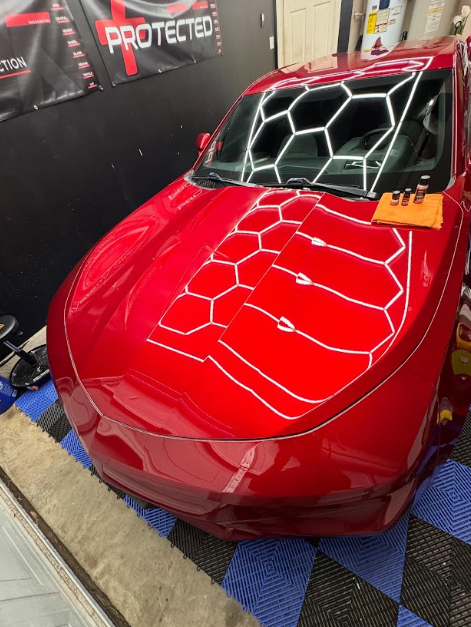
Through a direct paint inspection, usually under dedicated lighting that reveals swirl marks and light defects that aren’t visible under normal conditions. That inspection is what actually determines whether the standard bonding-preparation step is sufficient or whether more extensive correction makes sense.